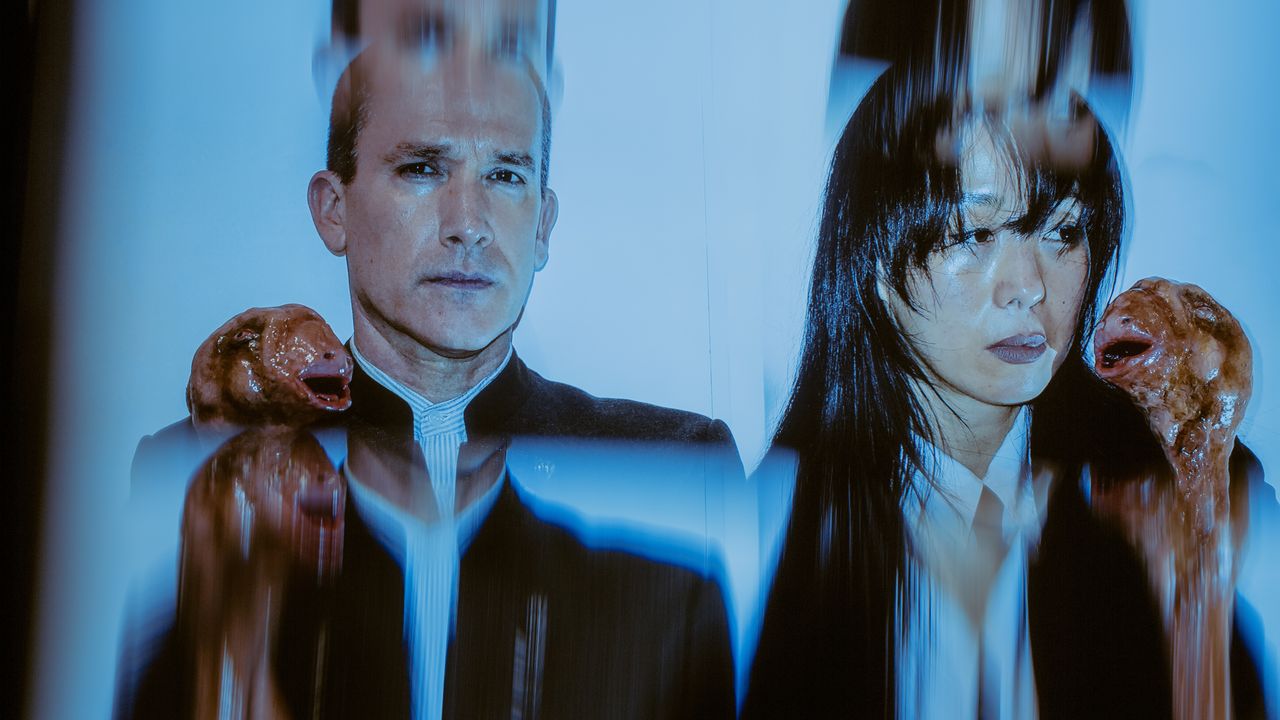
Xiu Xiu have transformed their David Lynch Eraserhead-inspired concert concept into a studio album, according to Pitchfork. Jamie Stewart and Angela Seo, the creative forces behind the project, have taken an idea they have been developing in performance and reshaped it for a recorded format.
The news places the album in a particularly intriguing space: not simply as a new release, but as the studio version of an existing live concept. Rather than beginning as a conventional album cycle, the project appears to have grown out of performance, where structure, atmosphere, and audience presence can shape how an idea evolves over time.
For Xiu Xiu, that pathway makes sense. The group has long operated in a zone where music, art, tension, and theatricality can overlap without needing to be neatly separated. A project connected to Eraserhead fits that sensibility, not because it requires direct explanation, but because David Lynch’s work often invites interpretation through mood as much as narrative.
The key shift here is the move from concert setting to studio recording. A live concept can be immediate, unstable, and physical, changing with the room and the audience. A studio album asks for a different kind of precision. It fixes the idea in place, or at least gives listeners a version they can return to repeatedly outside the original performance environment.
That transition is the story at the center of this announcement. Stewart and Seo are not just referencing Lynch’s film as an aesthetic marker; they are adapting a performance-based work into an album. The studio becomes a second stage, one where the materials of the concert can be reconsidered, compressed, expanded, or reframed for listeners encountering it through headphones and speakers rather than in a venue.
The connection to Eraserhead also gives the release a clear conceptual anchor. Lynch’s film is not being treated here as a passing influence in the background of a song or a visual reference attached after the fact. Based on the report, the album itself is built around that source of inspiration, carrying forward an idea that Xiu Xiu have already explored in concert form.
What remains compelling is how little a concept like this needs to be overexplained in order to make sense within Xiu Xiu’s world. The project’s premise is direct: a David Lynch-inspired concert work has become a studio album. From that simple frame comes a larger question about how performance art, film influence, and experimental music can move between formats without losing their charge.
For listeners who have followed Xiu Xiu’s willingness to approach music as a space for discomfort, intimacy, and abstraction, the announcement offers a new entry point into that ongoing practice. For those coming to the project through Lynch, it suggests a musical response that treats cinema as a living source rather than a fixed object.
As a piece of new music news, the album stands out because its origin story is already part of its identity. It is not just a record inspired by Eraserhead; it is the recorded incarnation of a concept that has been tested in front of audiences. That history gives the album a built-in sense of movement, carrying it from the stage into the studio and, now, toward listeners beyond the room.