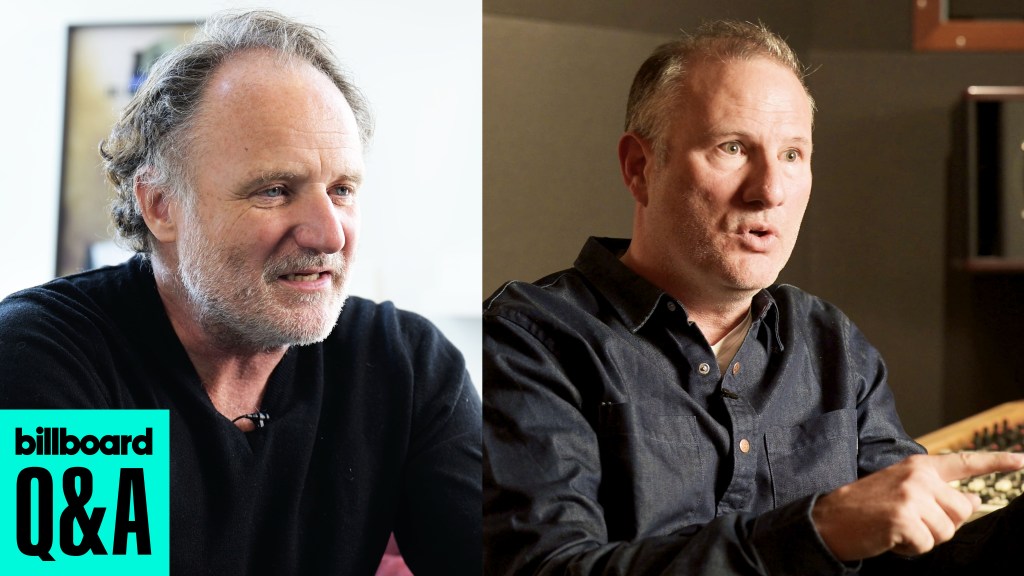
Believe founder Denis Ladegaillerie and executive Romain Vivien are the focus of a new Billboard News interview, where the pair discuss the company’s reported close to 10% share of the global digital music market, its international momentum and the artist-first model that has helped define its identity.
The conversation arrives at a moment when the structure of the music business continues to shift around digital reach, ownership and global audience development. For Believe, the discussion centers on how a company built around digital distribution and services is positioning itself in a market where artists are increasingly focused not only on exposure, but on control.
According to the Billboard News feature, Ladegaillerie and Vivien address Believe’s rise in the digital music ecosystem, pointing to the company’s reported proximity to 10% of the global digital market. That figure frames the interview as more than a simple company profile. It places Believe within a broader conversation about how independent-minded models are competing for influence in a streaming-led landscape.
A key part of that story is geography. The executives discuss Believe’s strength across Asia, Europe and the Middle East, regions that have become increasingly central to the global music conversation. Rather than treating international growth as a secondary lane, the company’s outlook appears tied to a broad view of where artists and audiences are connecting digitally.
That global emphasis is significant because digital music does not move through one market alone. Listening habits, artist development paths and cultural scenes can vary widely from region to region. By highlighting Asia, Europe and the Middle East, the interview underscores Believe’s ambition to operate across multiple centers of influence rather than relying on a single industry capital or traditional route to scale.
The other major theme is ownership. The Billboard News segment notes that artists including Janet Jackson, Cleo Sol and Russ use Believe’s model to retain ownership of their masters. In an industry where master rights remain one of the most important and closely watched issues for artists, that detail speaks to why alternative business models continue to attract attention.
The presence of those names also helps clarify the kind of value proposition being discussed. Believe’s model is not presented simply as distribution for distribution’s sake. It is connected to a wider artist services conversation, where musicians may seek infrastructure while holding onto core rights. For artists who prioritize independence, that balance can be central to long-term decision-making.
Ladegaillerie and Vivien’s discussion also reflects a wider industry tension: artists want global reach, but many also want more control over how their work is managed. The traditional trade-off between scale and ownership is being questioned across the business, and Believe is positioning its approach around the idea that those goals do not have to be treated as opposites.
The Billboard News interview does not need to rely on dramatic claims to make its point. Its most relevant takeaway is that Believe’s executives are speaking directly to the issues shaping the current digital market: international expansion, measurable share and artist control. Those themes are now central to how modern music companies define their role.
For Believe, the message is clear. The company wants to be seen as a global player with meaningful digital market presence, regional strength across key territories and a structure that appeals to artists who care about master ownership. In a music economy still being rewritten by streaming and global discovery, that combination is the newsworthy part of the conversation.